Customers of Feeling
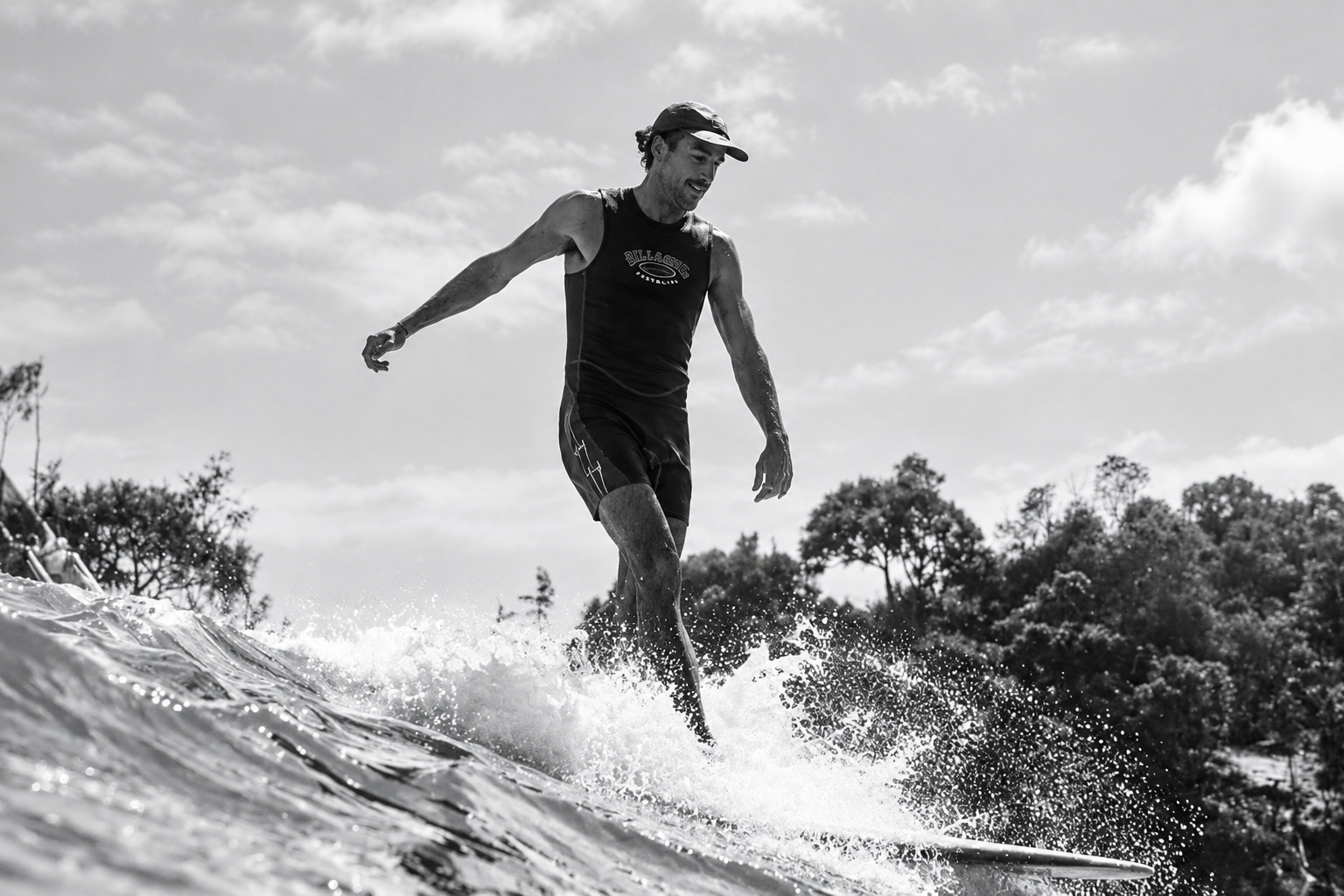
The industry’s most valuable asset is not resorts or surfboards, but surfers and their dreams.
By Alex Day
The surf industry exists because we do. Without us, there is no industry to build: it feeds off what we love, uses what we desire and monetises our search for freedom. Every industry needs a customer, and the surf industry directly sells a feeling over a product because surfers, once commencing their bond to the ocean, become customers of feelings.
Customers to belonging, peace, flow, liberation and a different way of living. Surfing is a channel to access the feelings we wish to live through — or find.
We are not only dedicated riders of waves but also customers of these experiences that evoke profound states, and here is where the industry opens its doors. Our wants become the experiences it sells and so ultimately, the focus of its marketing: the stories, subscriptions, still prints and selling points, work to the echo of what we say, how we move and what we fuel.
It is the investment that builds an establishment. It is the movement of our money towards non-locally owned accommodation, factory-made surfboards, unsustainably made products and colonised coastal communities, that allows this industry to see possibility. It keeps its eyes on the investment of our choices, believing the source of profit lies in the attention of our energy.
It is not creating the desires we suddenly realise we want, but rather it responds to what we already know we want. It packages the feelings we yearn to find through surfing into material commodities. It knows us, and offers it to us.
The greatest paradox may be that it aims to profit off something that can never be truly sold. Never truly found in a substance, a source, a product, or anything outside of ourselves. Internal states are not commodities, and surfing’s greatest lesson is the connection to where they truly originate from. What we truly desire to find in life never lay in the search for what exists outside us, but rather how we feel when we relate to it.
In that, a question of origin arises: is the industry a reflection of our belief that we must seek in the material world what we wish to feel within ourselves?
If we seek untouched waves through modernised luxury accommodation, such developments often arise from the displacement of local communities. If we seek surfboards, gear and equiptment at ever-cheaper prices, those savings are produced at the consequence of environmental degradation, unethical labor practices and moral responsibility. If we seek access and knowledge to utopian waves, the industry delivers it through social media and global travel, yet this accessibility often comes at the expense of preservation, sustainability, and the very places that inspired such yearning.
The industry’s most valuable asset is not resorts or surfboards, but surfers and their dreams. Without desire? There is no market. Without the imagination of what we could have, there is nothing to create for us. We are the resource to harvest. The sitting ducks. We’re the fish in the barrel. In reality, the industry is an extension of surfers; its role is to observe us and monetise what we ache for.
If the industry merely mimics behaviour, we then have to ask: where does the outcome of the surf industry rest? Does the reflection simply show us the impact of our choices, our investment and our desires? Does the responsibility fall absolutely on the businesses, the investors, the marketers, or does it also lay on the surfers creating the demand for their products, and the impact they create?
This transforms the conversation from:
“What is the surf industry making surfing into?”
to:
“What are surfers collectively asking the surf industry to become?”
The surfer may not be the charter boat company, foreign investor or unsustainable brand. However, without the surfer, none of them exist.