Is Discovery Respect or Consumption?
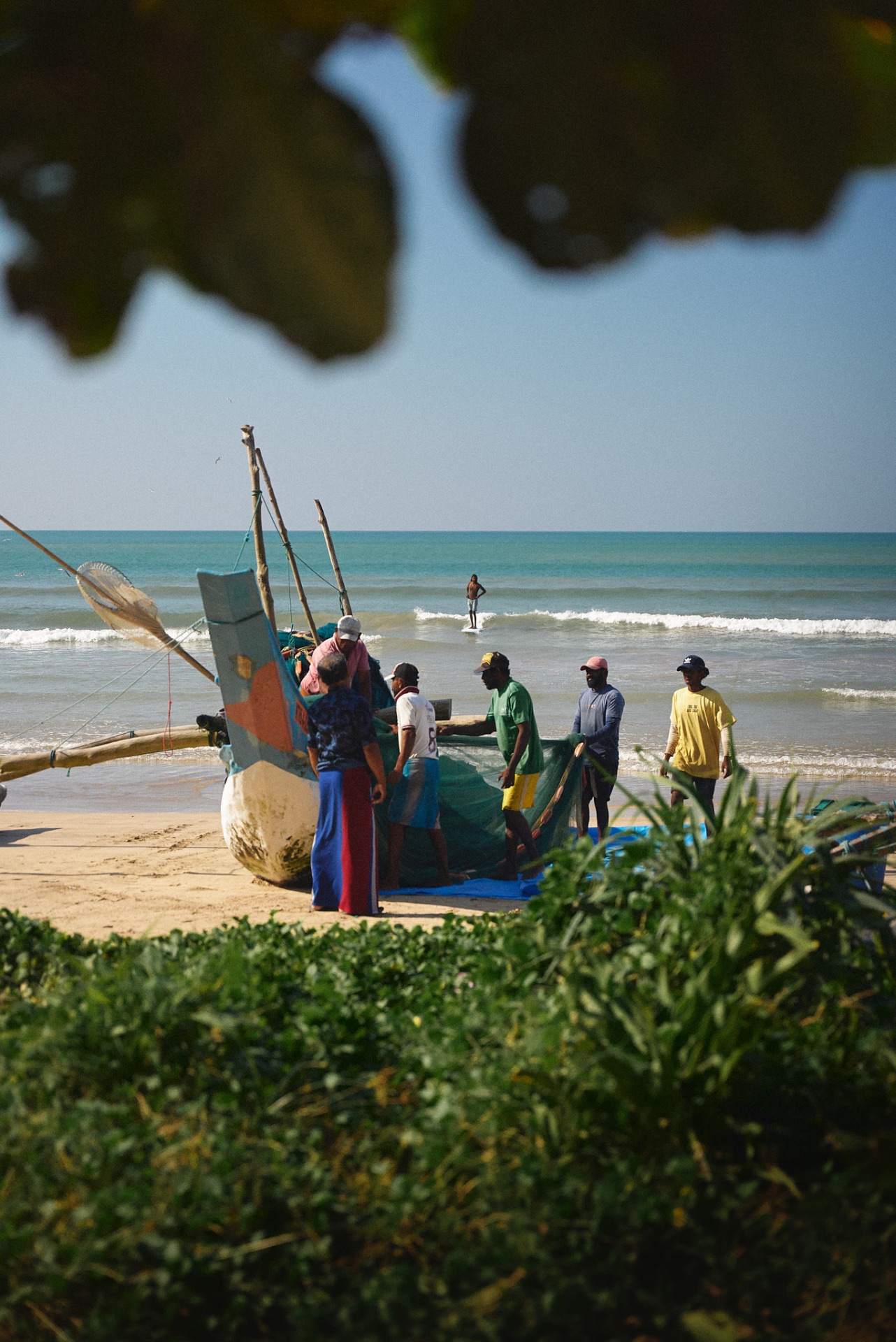
In today’s world, a single post can change a place forever.
By Alex Day
Can undisclosed retreat locations challenge the assumption that discovery must always lead to exposure?
For much of surfing’s history, mystery played an important role—not only through unmapped coastlines or unnamed waves, but through an understanding of something greater than us. We searched for and moved with waves for an honest connection to the world within us and around us: to nature, to people, to ourselves, to the questions we wish to answer and the states we hope to find.
What if it is never about finding the wave, but entering into relationship with something greater than us?
The unknown may be more important than what we own. It demands humility; it reminds us that not everything exists for our consumption.
In ten or twenty years time surfing’s history may have a different appearance: the surfing world is forming a new relationship with mystery and the path to connecting to what is greater than ourselves.
Because an era has been birthed where the discovery of a surf destination is directly converted to commodification. Our experiences render themselves tools for content and our accessibility is confused with entitlement.
Exposure is now a form of currency and the reverence to mystery is becoming increasingly rare.
Yet some people are choosing to move against that current. Riany, founder of Floating You Retreats, is one of them.
She is asking uncommon questions: not what can be shared, but what should be protected; not what we can access, but what we are willing to leave unknown.
She is bringing undisclosed retreat locations to the surfing world because, to her, respect sometimes means restraint: loving a place may require leaving parts of it unrevealed. She explains:
“Protecting a place, for me, does not mean keeping it hidden forever. It means being thoughtful about how we introduce people to it. Over the years, I have realised that my role is not simply to take people to beautiful places. It is to help them understand their relationship with those places.”
As the host and creator of deeply intentional surf retreats across China, Morocco, Indonesia and Sri Lanka, Riany has witnessed first-hand the accelerating impact of exposure. It is a reality that has fundamentally shaped how she designs her retreats.
“Some retreats are application-based…participants apply rather than book online, they are asked not to publicly share locations. It’s not about exclusivity, but stewardship. It is about responsibility. I want people to think about the impact of a location tag, a viral video or an endlessly shared surf spot. In today's world, a single post can change a place forever.”
For Riany, that reasoning extends well beyond surfing itself:
“Protecting a place means thinking beyond the immediate economic benefit.
Tourism can create income and opportunity, which is important, but we also need to ask what remains for local communities in ten or twenty years time. Are they still able to live there? Do they still own their land? Has development improved their quality of life, or has it slowly displaced them from the places they call home?
Those are questions I think about often. For me, conscious travel is about balancing access with responsibility. It is about allowing people to experience extraordinary places while ensuring that those places, and the communities connected to them, continue to thrive long after we leave…If we love these places enough to visit them, then we also have a responsibility to help protect them.”
Ethical storytelling may not be about hiding everything, but rather about asking whether sharing something creates genuine value, sparks something in someone or simply feeds consumption.
What did relationships with a destination look like before the pursuit of likes and the discovery of untouched places as content?
What happened to travel as it once existed before social media—people connecting with local communities, learning from one another, sharing stories around the fire, surfing together and developing a authentic relationship with a place?
What is being lost when every experience is immediately converted into visibility?
Those questions have shaped the choices Riany has made as a business owner:
“I have access to places and experiences that would attract a great deal of attention online.
Today, Lombok is far more established as a surf destination. It would be much easier for me to market retreats there. People already know the destination; the infrastructure exists and there is less logistical complexity.
Interestingly, I eventually chose to move away from the very thing that would have been easiest to sell. Instead, I chose to move many of my retreats into remote parts of Indonesia.
If my goal was simply to grow a following, gain visibility or sell more retreats, I could easily create content around those destinations. From a business perspective, it makes very little sense.
We transport people, surfboards, yoga equipment and supplies into locations where very little infrastructure exists. Every retreat requires significantly more planning, more effort and more expense. There are moments when I question my own sanity. But the reason is simple: I know the experience is better.
People have space. They can actually learn. They catch more waves. We can teach surf etiquette. They spend time in nature without the constant pressure and crowds that increasingly define many surf destinations.
For me, that experience aligns more closely with what surfing represents. I don't want to contribute to a cycle of exposure that ultimately changes the very thing that makes them special.”
Perhaps this is not only a question for surfing.
How often do we sacrifice long-term values for short-term growth? How often do we contribute to changes we later regret because they appeared beneficial in the moment?
“There have been many moments where growth and values pointed in different directions.
I won't pretend those decisions are always easy. Floating You is still a small independent business. Every retreat matters. Every booking matters. There are certainly faster ways to grow.”
Underlying these decisions is a philosophy shaped by Riany’s own experience of belonging to multiple places at once. As someone who is both German and Sri Lankan and who has spent years living in Indonesia, she understands what it means to arrive somewhere as a guest.
“I don't see travel as a right. I see it as a privilege. Because of that, I approach every place with a great deal of respect and curiosity. For me, entering a destination isn't just about arriving and consuming what it has to offer. It's about taking the time to understand its people, culture, history and relationship with the land and ocean. Travel should create connection, not simply extraction. That philosophy is deeply embedded in how I design my retreats.”
This philosophy extends its reach to the communities surrounding the waves her retreats access, and with it we can ask ourselves the question: how do we care for the people whose homes surround the waves we discover?
“Whenever possible, I involve local guides, teachers, hosts and community members. Not only because it supports local economies, but because they hold the wisdom and perspective that visitors simply don't have.”
One initiative has become foundational for her retreats.
“One initiative that is particularly close to my heart is inviting local women and girls to join our retreats free of charge. Over the years, women from Sri Lanka, Morocco and Indonesia have participated alongside international guests. What began as a small idea has become one of the most rewarding parts of the experience. While the retreats may create opportunities for these women, the exchange goes both ways. They bring perspectives, stories and ways of seeing the world that enrich the entire group. Those moments of genuine human connection are often far more impactful than any wave we surf.”
Her retreats access the ocean as a meeting place rather than a resource.
“Moments like that remind me that the ocean creates a language of its own. Nowadays, experiences like these are becoming harder to find. It has taught me that sharing waves can be a form of communication.
And perhaps most importantly, it has taught me that people are far more alike than we sometimes think. On the surface, their lives can look completely different. They come from different countries, cultures, religions and social backgrounds. Yet when you spend time with them, you realise they are often connected by something very similar.
A love for the ocean, the desire for freedom, the need to be close to nature.
A curiosity about life beyond what is expected of them.
That has taught me that surfing is about so much more than waves.”
In a world of rapid accessibility, as surfers, we must ask: has attainment become the basis of our relationship with waves? Have we pursued absorption so intensely that mystery is now extinct? That discovery is no longer separate from consumption?
Because accessibility can remove a place from itself. It can become a vehicle for commodification.
For the surfer, discovery is not merely a journey that intrigues the senses, satisfies the heart, or brings hope to where we are. It is a necessity—a respect for the unknown, for what is larger than us. It is a reminder that we are not the only ones receiving the impact of our choices, but part of an entire world.
Not disclosing retreat locations may be the gateway back to this respect. Back to what is beyond us. Because the velocity of modern life means that once a process begins, it is often impossible to reverse. Our need to move forward can diminish our ability to look back: to notice the impact we have made, and what others will now be made to face because of it.
Speed gives us permission to forget our connection to everything. Riany, and her retreats may be the catalyst for our strength: to move against the normality of what feels easier, of what the surfing world has become too comfortably accustomed to.
We may need to ask ourselves: what happens when there is so much content that there is nothing left to connect with?
“…every time we share a destination, we influence it.”