The Search for Style
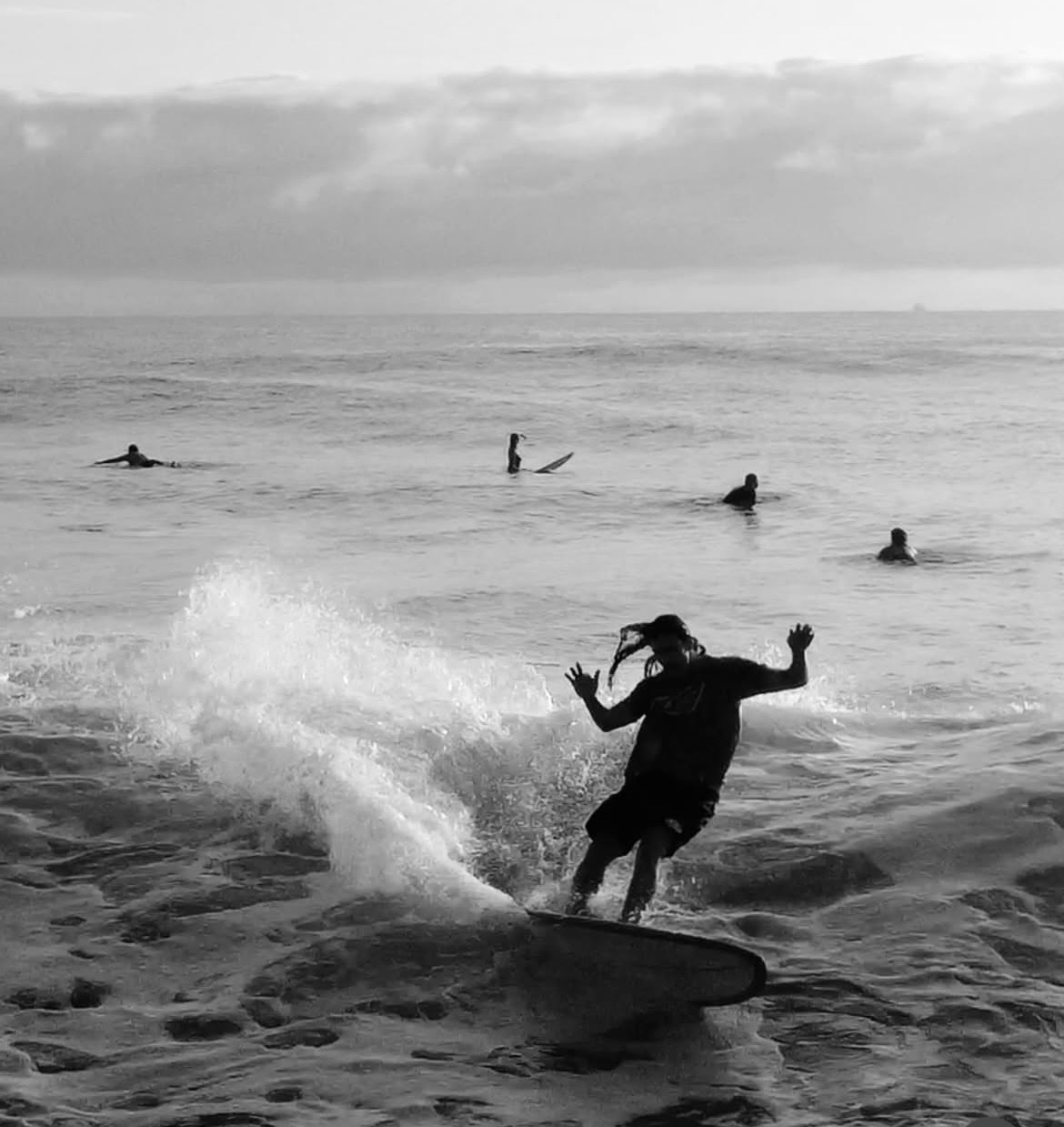
“Surfing Style” is not just a visual preference; it has become a system of moral judgment. Is it taste or ethics? An act of individual expression or one of conformity?
By Alex Day
If the Buddha is the awakened teacher of Buddhism and Jesus the divine saviour of Christianity, then Gerry Lopez, Rob Machado, Mickey February, Steph Gilmore, and Torryn Martin have become the gods many surfers follow in search of their own enlightenment.
These figures embody traditions that generations of surfers continue to preserve. At the heart of those traditions is a single idea: what good surfing is supposed to look like—and, just as importantly, what it is not.
The illusory drop knee. The effortless high-line bloom. The controlled Zen-like low pop-up. The timeless vertical drop. The unhurried, savoured glide and trim. The upright posture, arms hanging low and relaxed. Together, these movements form an aesthetic language that many surfers have come to idolise.
The gods of surfing “style” are often revered as effortless, visually enticing, and almost unearthly. Their image makes the mouth water, the skin long for salt, and the heart dream of attainment.
Surfers of all ages, skill levels, and board lengths paddle like ants towards their creator, believing they will become “good” at surfing only once they are able to replicate the surfing god they follow.
“Good” surfing becomes tied to the way they look on the wave, rather than how they feel or, more profoundly, how honestly they have expressed themselves on the ocean’s canvas. Performance and perception become the measures of fulfilment, replacing authenticity as the benchmark for a meaningful relationship with the wave.
That leads to an important question: how much does the need to replicate “surfing style” reduce surfers’ experiences to binaries of “good and bad”, “right and wrong”, “what should be and what should not”?
And where does individual expression fit within those binaries? Do we lose ourselves on the ocean’s surface, or do we find ourselves there?
It must. Because both humans and surfers exist through nuance: the micro-variations in how we see the world, what we think, believe, dream, and long for. We are not made to fit moulds, and neither is our surfing.
Otherwise, surfing risks becoming a soft industrial design system for human movement, leaving little room for individuality. We may as well all buy the same outfit from Kmart, get the same haircut, hold the same opinions about everything, and decide there is a single mould of emotional response to life that we all must follow. In doing so, we would sacrifice the very thing that makes both people and surfing unique: personal expression.
This matters because these subtle dichotomies shape a surfer’s relationship with the wave more deeply than we often realise. Ask yourself: have you ever left the water dissatisfied because you feared you looked wrong? Have you ever felt insecure because your surfing didn’t resemble the style or technique the surfing world celebrates? If the answer is yes, then this is where surfing style begins to shape us.
Social media propels this construct; it enforces what becomes standardised through visibility loops.
Instagram is laced with what “surfing style” is, and, quite polarisingly, what it is not. Recently, I came across a reel in which a surfer claimed he could not bear to watch people surf with their arms raised in front of them. He then promoted a course that promised to teach viewers how to avoid looking like a kook and instead become “stylish” surfers.
If you stay on this video for more than a moment, the algorithm will deliver you the entire web’s two cents on what not to do and what to do if, that is, you want to reach the god-like styles of, well, someone else.
But what about your own surfing style? What about who you are in the water, outside of the generational names, YouTube videos, subliminal style guides, and collective conformity?
We should not lose these micro-variations of ourselves to an ideal—not even in surfing. Our rhythm, timing, carving, emotional expression, appetite for risk, and choice of waves should emerge from within, not from an image we believe we must imitate.
Perhaps we should ask ourselves: is our surfing an individual practice or a performance for others? Are we being with the wave, or are we more concerned with being seen on the wave? When we take the drop, race down the line, or hold our arms in a particular way, are we expressing who we truly are, or are we performing someone else’s identity?
When a single aesthetic becomes the ideal, it no longer celebrates difference; it diminishes the diversity that surfing naturally invites. In doing so, it risks stripping surfing of one of its greatest gifts: the opportunity to develop an authentic relationship with the wave.
Is surfing style drifting towards a single dominant visual language instead of embracing the world’s many surfing dialects? Perhaps our surfing gods were never meant to govern our expression. Perhaps they were only ever meant to remind us what is possible when we surrender ourselves completely to the ocean. The wave has never asked us to look a certain way. It has only ever asked us to meet it honestly.